
Alone-048ae

LightStone-097ae

LightStone-099ae

LightStone-126ae

LightStone-129ae

LightStone-137ae

MassField-123ae

MassField-130ae

LightStone-138ae



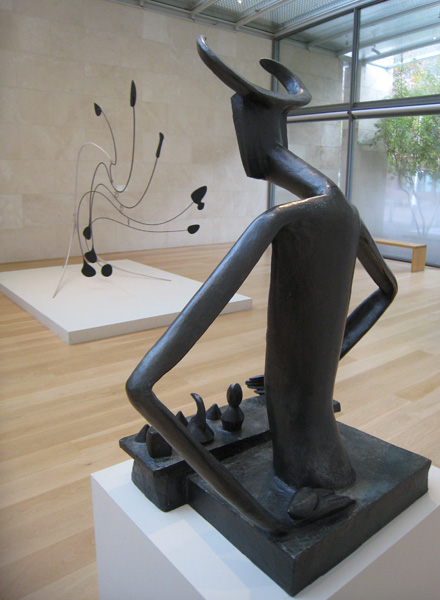
It is at that moment
the exact time
when wobble from equilibrium
resynchronizes
when mind relatches
onto certainty
stability regained
it is at that moment
a bifurcation in time
opens
alternative trajectories diverge
one in which
there is control
and another
lurking
waiting to propel
one’s soul
along an inconceivable path.
It is at that moment
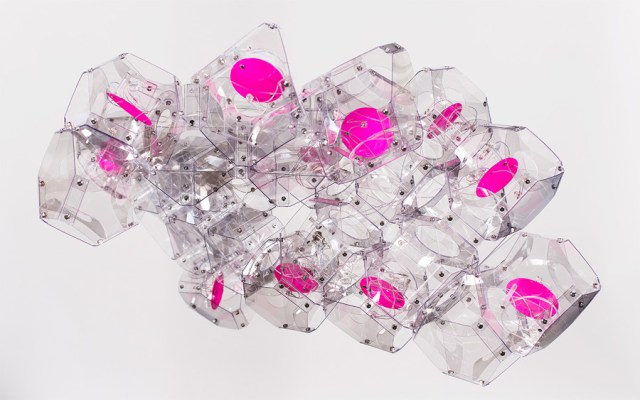
The Perplexity of Transparency – Polycarbonate, stainless steel, copper, light emitting diodes; dimensions variable, as shown 32″ x 23″ x 12″
The Oregon College of Art and Craft annual Art on the Vine auction took place at the Portland Art Museum on Saturday evening, March 5. My work, The Perplexity of Transparency was included among the student commissioned works featured at the auction. The concept for this work dates back to January 2013. Three years of effort were needed to solve both engineering and aesthetic problems culminating in a work that embraced Art on the Vine as theme. The work represents the essence of the molecular structure that underlies the world of materiality. It can be viewed as a framework for an infinite variety of forms placed within, interwoven among, and protruding from geometric space defined by molecular structure enlarged to the scale of human perception. In it, one encounters the wonder of complexity of form that can emerge from the combination of such simple and primitive geometric shapes as the triangle, rectangle, hexagon, and circle.
Perplexity refers as well back to the original concept, expressed in the first posting on September 14, 2015, that molecules do not have edges. At the level of visual perception, the work, as it represents a molecular structure, has a material edge. However, it is composed of panels of polycarbonate that from some angles are completely transparent, while from others, are highly reflective. The complex interplay of transparency and reflectivity changes in infinite variation as one moves around the work.
Artist statement
From the subatomic world of fundamental particles to supernova, hierarchal assembly brings into existence objects that humans perceive through vision, through hearing, through touch, and though senses of which we are only vaguely aware. My way of viewing the world is informed through the lens of science. I view materials in terms of molecular constituents and structure. Although invisible, molecules can be imagined through an elaborate set of visual tools and models. The knowledge of all of chemistry and biology is transmitted by way of graphic images of these models. Inspired by the theme, Art on the Vine, I sought to combine the ideas of Pinot Noir grapes, wine, and the red-purple pigment responsible for its color.
Starting from the molecular structure of malvidin-3-glucoside (a red-purple pigment found in wine grapes), I computationally generated a 3-dimensional structure that enabled me to visualize the framework and electronic nature of the molecule. This was translated into a sculpture that captures ideas of a cluster of grapes, a glass of wine, and the molecular-electronic structure of malvidin-3-glucoside. The sculpture was created from a combination of transparent polycarbonate sheets shaped into tetrahedral and trigonal shapes of carbon and oxygen atoms. The individual shapes were connected using stainless steel screws. The interior of the sculpture was configured with eleven LED lights and dyed synthetic fabric that can absorb blue light and reemit the light at a longer wavelength. The network of wires through the sculpture exists as a parallel concept to both intracellular networks and the capillary system within the grape vine.
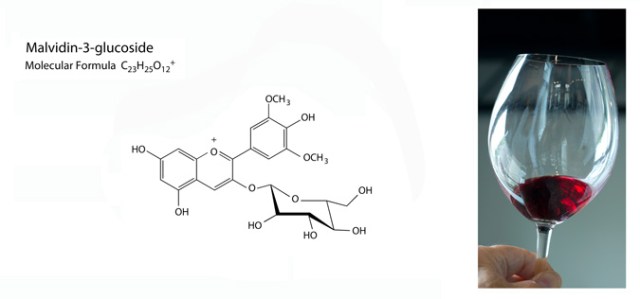
Structure of the red pigment, malvidin
The sculpture was designed to hang by three 3/64” stainless steel wires (included) from a ceiling (Arakawa hardware includes all materials required for installation into conventional sheetrock without the need for any other reinforcement) and includes a wireless remote dimmer switch and 12v transformer that can be plugged into a standard 120v electrical outlet.
Each Christmas we dream of the next generation of electronic gadget, the one that gives consummate satisfaction and delight. Then, the gadget in hand, disappointment creeps in, satisfaction dissipates. The gurus of Silicon Valley assure us that the ultimate experience is at hand, just a few more improvements and the right apps, and devices of virtual reality will be ….well, reality.
But there is a conundrum, no one seems to know what ‘killer apps’ will most engage the consumer.
Writing in the New York Times, Nick Wingfield* says,
Still unsettled is the question of which experiences will be most compelling. Like many people who have gotten a taste of virtual reality, Ben Schachter, an analyst who follows the game industry at Macquarie Securities, is bullish on the technology. Yet when asked to name a compelling application for it, he struggled. “I haven’t seen that one thing that makes you want to stay in there for hours,” Mr. Schachter said. “I’m frustrated I haven’t seen it yet.”
A lot of creative people are working to figure out what will be the most compelling virtual reality apps, whether games or movies.
‘Whether games or movies’? There’s the problem, I think neither. I do think that the efforts of the Times to create ‘virtual reality’ experiences as immersive news stories will be fruitful, and as claimed will enhance the experience of the consumer. But I think only incrementally.
So what does have the potential to provide transformative virtual reality experiences? The answer is far more simple than you might expect. It can be summed up in one word, conversation. Conversation in which the virtual person across from us (or next to us), not only responds to our words and language, but to our emotions, our facial and body language. Conversations that are deep and open-ended. This is not so far fetched.
The 17 July 2015 issue of Science was devoted to the topic of artificial intelligence. If you have access to Science take a look at the photograph on page 248 and the article by John Bohannon, “The Synthetic Therapist”(pp. 250-251).
Imagine now the rate at which the technologies surrounding artificial intelligence are evolving. We are rapidly approaching the satisfaction of the ‘Turing test’, in which the responses of a computer (to a human subject’s questions) are indistinguishable from the responses of a real person. Superimpose on that the technology of facial expression interpretation and a deep database and suitable algorithms for synthesizing responses based on the totality of the recorded writings and digital records of the person with whom you might wish to have a conversation.
We are not there yet, but the trajectory seems to be taking us in this direction. While almost certainly never able to match the warmth of real conversations, there are ways in which these virtual conversations could be compelling. Imagine a conversation in which the avatar has access to the sum total of human knowledge; the ability to deeply respond to every question. Imagine the people with whom you might have conversations, perhaps Maya Angelou, Susan Sontag, Sophocles, Mark Twain, Oscar Wilde, Jane Austen.
I sometimes create a visual work to express my thoughts about a topic. The photographs included with this post are two versions of the idea of the virtual conversation. The imagined subject is Philip Seymour Hoffman, who died tragically of a heroin overdose. So much left unsaid; what would further conversations reveal?
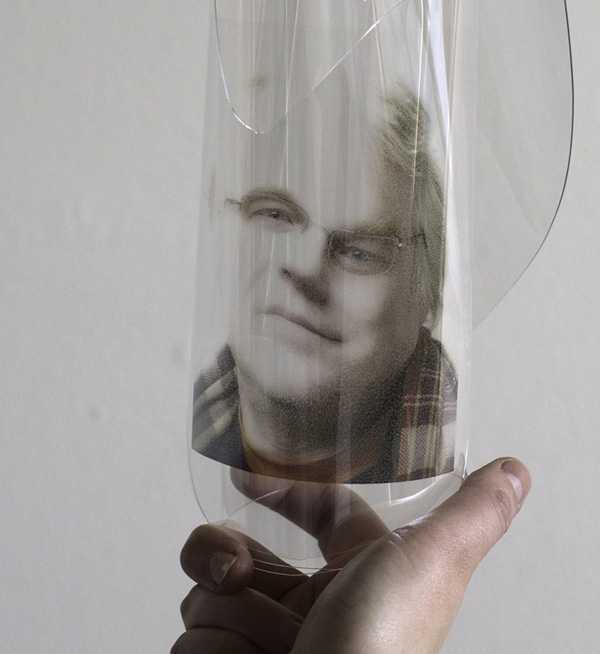
The Ghost in the Machine-I, projected image, 2015
Artist Statement
I know how we may talk with the dead. As a visionary, a scientist with deep understanding of the flow of science and technology I imagine what may come to pass. Among these visions are ideas about the ghost in the machine. I envision the confluence of information, data, code, and machine, enabling a new kind of existence. Recombination of fragments of virtual evidence from the cloud, like DNA from the past will enable the re-creation of virtual embodiments of the most engaging of deceased humans. Influenced by Hamlet’s conversation with the skull of Yorick and Gregory Crewdson’s staged scenes that reflect themes of isolation and loneliness, in longing for connection, I envision the technology of intimate encounters with incorporeal existences.
As an artist I give physicality to these visions, imbued with hints of what may not be quite right, warpages with unseen capacities to evolve into that which we may not want to see, conversations that we may not want to have. The work is expressed through projected digital images of the envisioned encounters.
Note: The work is constituted as a digital image projected onto a white wall. The height of the image should be at least six feet with the bottom of the image located three feet above the floor.
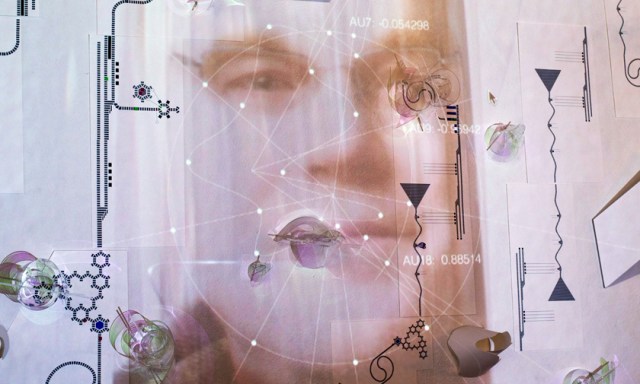
Ghost in the Machine – II, 2015, projected image

The Dinner Party 2015
For over two decades, Ferran Adriá chef at El Bulli (Roses, Catalonia, Spain), created some of the most extraordinary dishes in the world. Inspired by the digitalized slide show 1846 and a review by the art critic Roberta Smith (A Culinary Dalí, Delving Into Palettes, New York Times, February 13, 2014),* I thought it might be fun to echo the exuberant creativity of Ferran Adriá by creating a table setting with eight dishes composed of surplus electronic components. The work was shown at an exhibit of works in progress as part of the MFA in Applied Craft + Design program in Portland, Oregon on December 11, 2015. Like Adria’s culinary creations, my work’s existence will be transitory; the photographs that you see here, the only evidence of its brief existence.
I think that I shall prepare something a little more palatable for Christmas dinner.
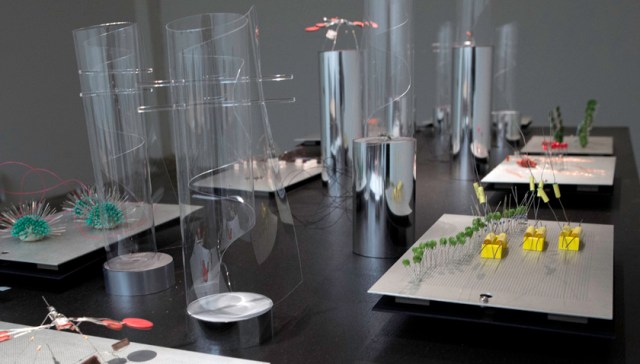
The Dinner Party 2015
Artist Statement:
Chefs are revered for their molecular gastronomical achievements and technological tour de force. Yet, to quote Anton Ego, the fictional food critic in Pixar’s 2007 computer-animated work Ratatouille,
After reading a lot of overheated puffery about your new cook, you know what I’m craving? A little perspective. That’s it. I’d like some fresh, clear, well-seasoned perspective.
My work seeks that perspective.
We are infiltrated, seduced and subjugated by the materials and devices of technology. The purest organic ingredients are laced with unseen traces of emitted synthetics and genetically altered substances.
My work, created from electronic components and contemporary polymers, makes visible this emergent world of cyborgian materials. Materials intimately and irreversibly integrated into our bodies, minds, and souls.

Place Setting; Culinary Resistance

Place Setting; Culinary Capacitance
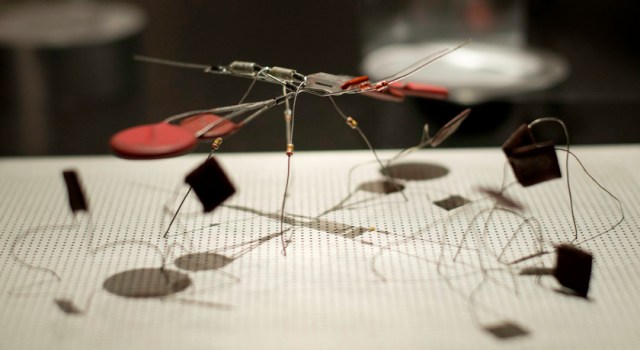
Place Setting; Whose food?
* 1846 slide show: (http://www.nytimes.com/video/t-magazine/100000002673580/1846-by-ferran-adri.html).
Roberta Smith review: http://www.nytimes.com/2014/02/14/arts/design/ferran-adria-opens-at-the-drawing-center.html?_r=0)
Roberta Smith writes: As these marvels glide past (in reference to the video 1846), much enlarged, they variously evoke jewelry, sculpture, architecture, landscape architecture, furniture, early Dalí paintings and so forth. Dazzling, unfamiliar and sometimes mouthwatering, they celebrate art in any form as a thrilling, open-ended but all-consuming endeavor.
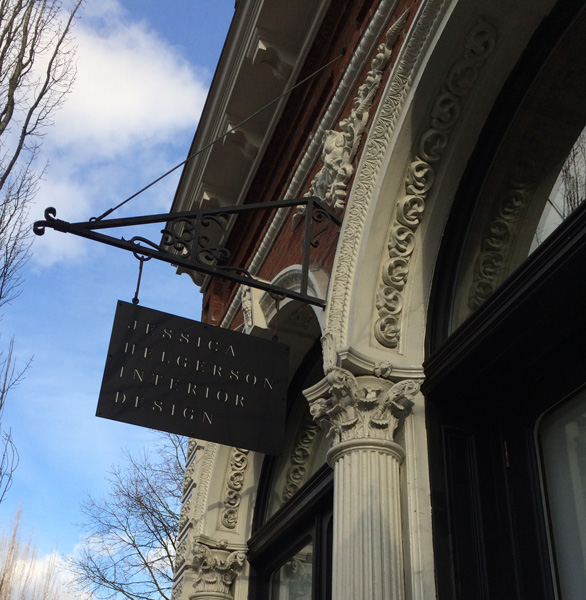
Jessica Helgerson Interior Design, Portland, Oregon
Christmas still feels like a magic time. Christmas music, decorations, and lights that surround us are catalysts for memories from childhood. The trip to the foothills of the cascades to harvest a tree, time spent around the dinner table with family, the warmth of home bring into focus that which is most important to us. The approach to crescendo occurs in the delight of children scrambling about the Christmas tree searching for presents tagged with their names.
Then there are the gifts that come in the form of unanticipated encounters; encounters with mysterious objects that peak curiosity while defying explanation.

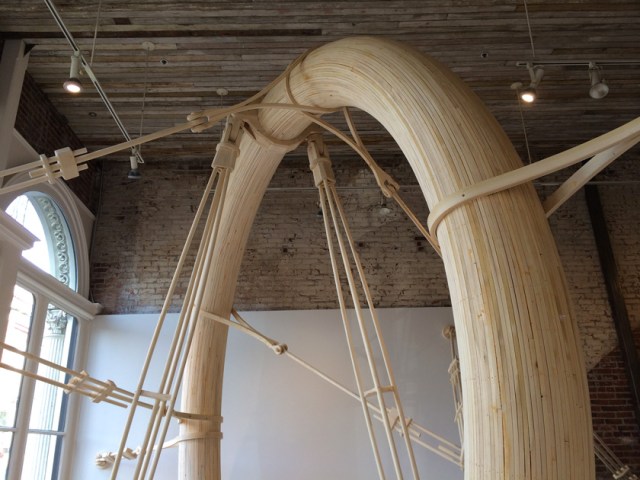
Mike Rathbun, I Have Love in my Heart as a Thief has Riches
The form of the encounter was a sculpture installed inside the Jessica Helgerson Interior Design Studio in downtown Portland. The work by Mike Rathbun, titled I Have Love in my Heart as a Thief Has Riches, is an exquisitely crafted wood structure (see posted photographs). The work is open to a wealth of interpretations, yet there was one association in which I became entrapped. The building’s classical façade, with Corinthian columns evoke ancient civilizations. The sculpture, which stands just inside the door, somehow evoked, and then immersed me in the journey of Odysseus; lost at sea, seeking, tenuous moorings, the longing for home and connection.
The work is simply astonishingly beautiful; difficult to say more. One needs to experience it in person. Jessica Helgerson Interior Design is located at 112 SW First Avenue, Portland, OR.
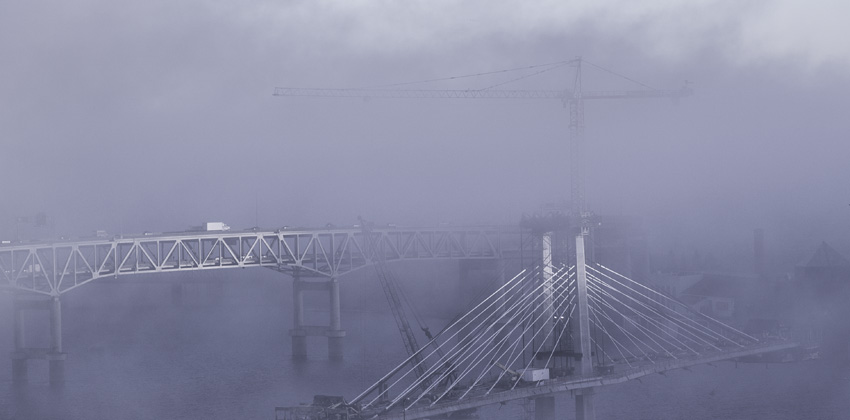
Tilikum Crossing suspension bridge under construction
For nearly two years my walks north along the Willamette River passed the construction site of the Tilikum Crossing suspension bridge (now completed). Like other structures nearby, the bridge is a bold superimposition of Euclidian geometry upon the natural rhythmic chaos of nature. This past Thursday on the way to gallery openings in Portland’s Pearl district I barely noticed the bridge as I walked by. But on the way back it once again loomed large in the landscape. Its geometry had assumed new meaning.
At Froelich Gallery, Michael Schulthesis’s paintings explode with mathematical equations interspersed with geometric shapes described within the polar coordinate system, as maps of mind in which memories continuously intersect with and overwrite other memories. The shapes that float through space morph between the precision of mathematics and the biomorphic forms of jellyfish, that in fact were variations of the limaçon of Pascal. At Blackfish Gallery, Heather Songbird’s Semblant Geometries, Euclidian geometric constructions become metaphors for tales from Karel Jaromirs Erben’s North-West Slav Legends and Fairy Stories from 1897. Across 9th street at Elizabeth Leach Galleries, the theme of Lee Kelly’s steel sculptures and works on paper reference the Observatory at Jaipur, a World Hertiage site in Jaipur India, renown for its architectural scale astronomical instruments dating from the early 18th century. Here one finds the geometry of ancient celestial co-ordinate systems in play.
At Whitebox, on 1st Avenue Katherine Longstreth documented choreographic process, movement, of head, shoulders, arms, torso, legs, feet; intersecting arcs, rhythms in time and space, sensuous geometries. Her show, Marginal Evidence (an interactive experience of dance-making) was an ode to the exceptional efforts that an artist makes to create geometric relationships in time. Here the x,y,z, Cartisian coordinate system of an individual human body practicing in the studio or performing on stage lies superimposed within the much more expansive coordinates of space and time defined by culture, city, country, and world.
On this mild October evening, as my mind filled with thoughts of geometric relationships expressed in movement, paint, steel, and the narrative arc of folk tales, I began to imagine yet another kind of geometry, one which describes the topology of conversation. There was a distinct and satisfying asymmetry to the conversations of the evening, first with Michael Schulthesis and then with Heather Birdsong. It was the asymmetry of intentional and inquisitive listening punctuated only by questions and comments of interpretation.. In the geometry of proximity, the infectious connectivity of their ideas, for a short time I joined the artists on their journeys.
 AgainstEdges