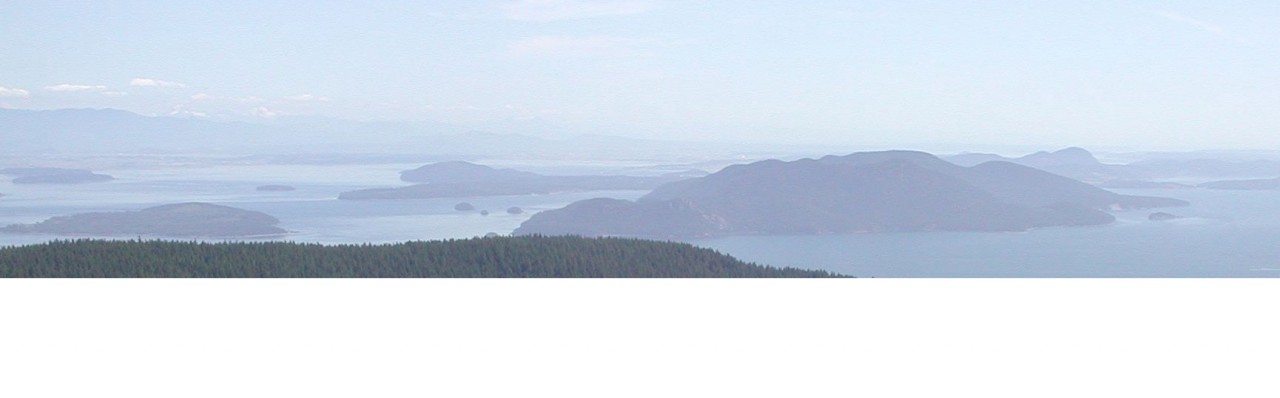


In a number of my postings there are photographs of stones, usually as part of a landscape featuring cliffs and mountains, frequently in association with water. The photograph in the header of Against Edges, taken from the top of Mt. Constitution on Orcas Island, shows a series of Puget Sound islands in the mid-ground and the northern cascade range in the distance. The image in the post Why Against Edges? shows a stone outcropping on the Oregon Coast. San Juan Journey echoes the same theme as does Cascades, At the Edge, and Destiny of Surface.
For my Master of Fine Arts Practicum I began to consider the transformation of stone as core to my final project, to be featured in a gallery show in May 2016. The process evolved from the casting of small stones (typically 2.5” x 5” x 1.5”) in transparent epoxy resin in January of 2016 to an installation measuring 32’ x 24’ x 12’ by May. The final work included 39 “transparent stones”, each cast from a from epoxy resin using silicone molds produced from basalt stone fragments obtained from Bureau of Land Management (BLM) along the Molalla River in Western Oregon. The images featured at the heading to this post show the site from which most of the stones were obtained. By casting in transparent resin the stones became vessels for concepts of transformation. The work included two large-scale graphic images, each composed of twelve 23” x 23” x 1/16” aluminum panels cut by water-jet and 39 wire objects designed to reflect fragmentation and molecular structure. The inspiration for the graphic images came from two sources, Yuichiro Kojiro’s Forms in Japan (the source of Richard Serra’s verb list) and Richard Feynman’s QED: The Strange Theory of Light and Matter. The images do not directly mimic any of the graphics of Kojiro or Feynman but they do play on the concepts of the trajectories and transformation of light and matter. Photographic images of the work are featured in four posts LightField/MassField – Set 1, Set 2, Set 3, and Set 4. Each set contains nine images.
 AgainstEdges